

Our focus is on practical, sustainable supports.
How we are different
Knowing what might help and being able to do it are two very different things.
What if exhaustion makes exercise feel impossible?
What if disrupted sleep is affecting concentration, motivation and makes adopting new habits feel like hiking Mount Everest?
How do you find bandwidth for self-compassion when your emotional regulation is more changeable than a super model’s wardrobe?
What if workload leaves little capacity for recovery?
Or someone understands the benefits of stress management but cannot change the circumstances creating the stress?
And what if asking for flexibility or support at work feels more threatening to professional identity or job safety than simply trying to push through?
This is where we believe the conversation needs to go further. At MenoAgility, we are interested not only in what can help, but what might be getting in the way of it helping.
Support is much more useful when it can actually be accessed, implemented and sustained.
How We Approach Menopause At Work
Menopause is far more than a change in reproductive hormones.
During perimenopause, levels of oestrogen and progesterone can fluctuate considerably. This can then Influence brain systems involved in serotonin, dopamine and GABA signalling.
Changes in our hormonal system can affect stress regulation, sleep, memory, attention and emotional processing. All vital components of functioning well in the workplace.

What Menopause Means for Performance

In the workplace, menopausal changes can show up in very practical ways:
struggling to find a familiar word in a meeting
feeling less able to tolerate pressure
losing confidence in previously automatic skills
becoming unusually overwhelmed
finding that the same workload now requires considerably more effort
Not every woman will experience these changes, and hormones are only one part of the picture. This is why good information, good support and clear directions towards appropriate and relevant help is important. Speaking to medical practitioners regarding concerns regarding symptoms remains the recommended first course of action.
Knowing What Helps Is Only Part of the Picture

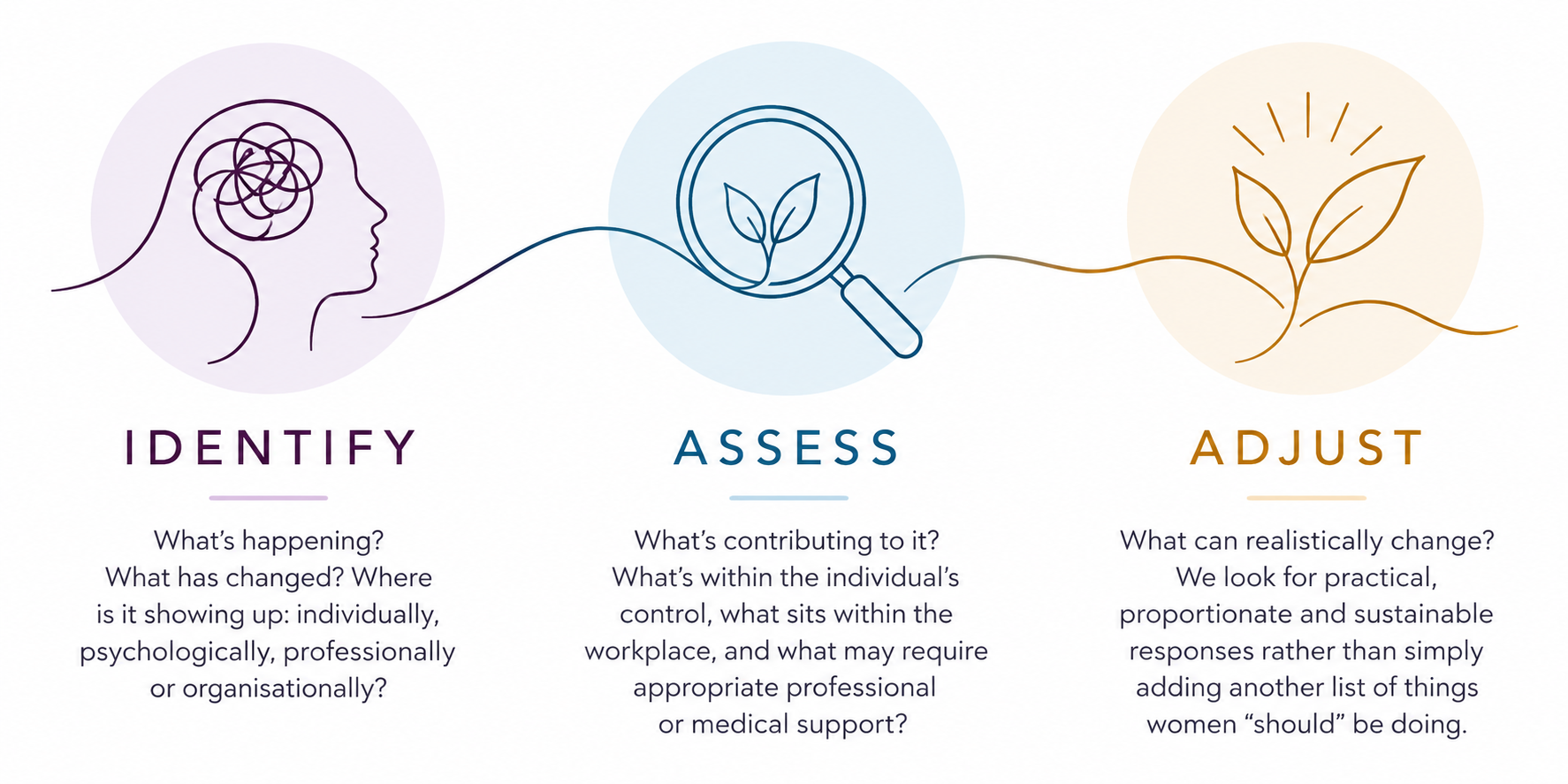
We know that there are things that can help. At MenoAgility, we bring the science together with the psychological, individual and workplace context, helping women, leaders and organisations better understand what may be happening and identify practical ways to respond.
Research supports psychological and behavioural approaches including:
mindfulness and relaxation practices
social support
good nutrition
appropriate workplace adjustments
stress management
mindfulness and relaxation practices
social support
good nutrition
The evidence continues to develop, but it is more than anecdotal: a review of 30 studies involving more than 3,500 women found psychosocial interventions, including CBT and mindfulness-based approaches, were associated with improvements in anxiety and depressive symptoms.
How We Work
At MenoAgility, we bring the science together with the psychological, individual and workplace context, helping women, leaders and organisations better understand what may be happening and identify practical ways to respond.
How We Support you
🔵 90-Minute Signature Roadshow
🔵 Supervision & Group Coaching
🔵 Online Courses & Learning
🔵 Retreats & Immersive Experiences